Key Takeaways:
-
First Verifiable Quantum Advantage — Google’s new 105-qubit Willow processor achieved a computation 13,000× faster than classical supercomputers using the Quantum Echoes algorithm, and—crucially—the result was independently verifiable on another quantum device.
-
Scientific and Practical Breakthrough — Unlike earlier “quantum supremacy” claims, this experiment produced results with genuine scientific value. It provided new insight into how quantum information propagates and opened pathways for real-world applications in chemistry, materials science, and physics.
- Co-design and Future Roadmap — The success depended on tight integration of hardware, algorithms, and verification methods. Google now aims to build long-lived logical qubits for error-corrected systems, signaling the next stage: reliable, reproducible, and practically useful quantum computing.
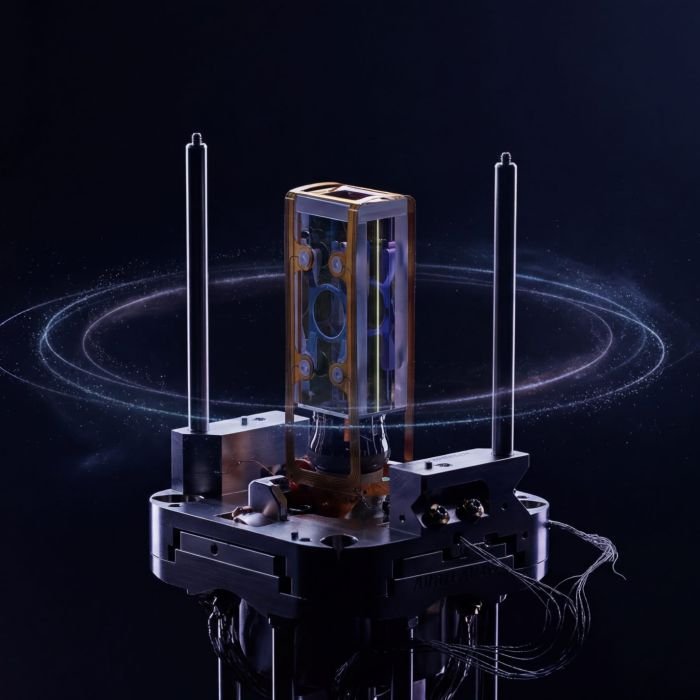
On October 22, 2025, Google Quantum AI announced a landmark achievement: the first-ever verifiable quantum advantage on real hardware. Using a new quantum processor called Willow — a 105-qubit chip — Google researchers ran an algorithm known as Quantum Echoes, which successfully performed a computation about 13,000 times faster than what the world’s most powerful classical supercomputers could achieve for the same task. More importantly, the result was verifiable, marking a turning point in quantum computing research.

What the breakthrough involves
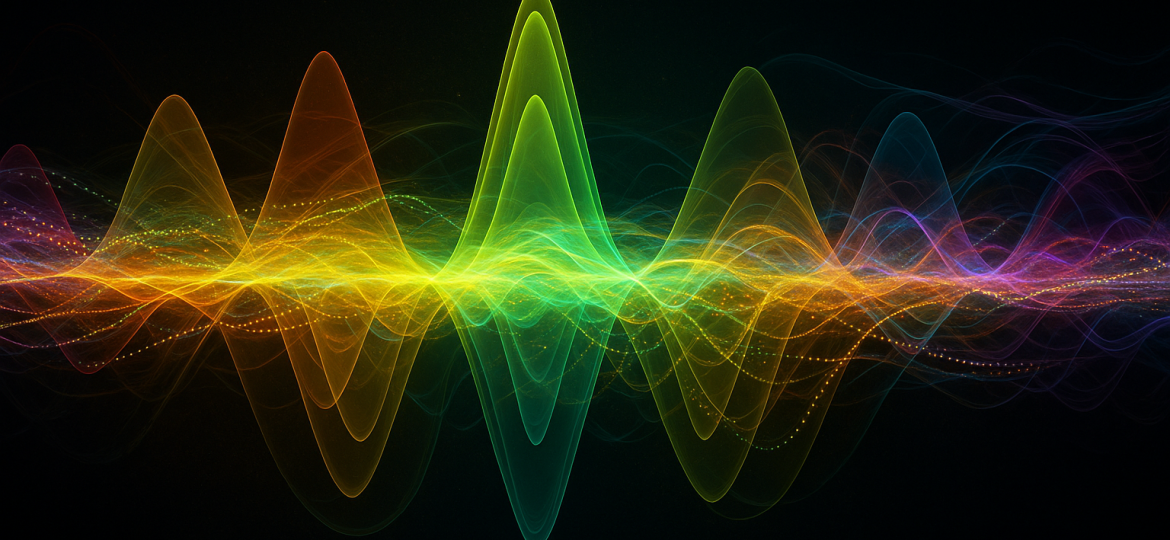
The Quantum Echoes algorithm is based on a concept called an out-of-time-order correlator (OTOC). In simple terms, this technique lets scientists send a signal through a quantum system, disturb it, reverse the signal’s direction, and then observe how that disturbance ripples back — like an echo. The goal is to study how information moves through quantum systems, a process that is notoriously difficult for classical computers to simulate because of the vast complexity of quantum interactions.

Using Willow, Google successfully performed this “quantum echo” process at speeds and scales beyond the reach of any classical computer. Even more significantly, the computation’s outcome could be cross-checked and verified on another quantum device, establishing a new level of trust and reproducibility in the field. This verifiability means researchers can now confirm that a quantum machine didn’t just produce some answer faster; it produced the right answer, and that result can be tested independently.
![]()
 Why it matters
This milestone represents more than performance demonstrations, but meaningful, validated science. Earlier claims of “quantum supremacy” often relied on artificial problems that classical computers could, in theory, solve—just extremely slowly. By contrast, Google’s Quantum Echo experiment reveals how a system of qubits interacts and entangles with itself over time, offering direct insight into the fundamental behavior of quantum information. The results can be experimentally confirmed, transforming the field’s credibility. It’s not just about speed anymore; it’s about a deeper understanding of quantum behavior, experimental reliability, and lasting scientific value..
The breakthrough also bridges quantum computing closer to real-world applications. Google’s team connected the Quantum Echoes technique to practical uses such as modeling molecules, magnetic materials, and even exotic physical phenomena like black-hole dynamics. In collaboration with researchers at the University of California, Berkeley, the team used the method as a “molecular ruler,” measuring atomic distances more precisely than conventional nuclear magnetic resonance (NMR) techniques. This suggests that quantum computation is beginning to make measurable contributions to chemistry and materials science, two of the most promising fields for early quantum applications.
Another key takeaway is the importance of co-designing hardware and algorithms. Achieving the Quantum Echoes experiment required extremely low error rates, high-speed operations, and software precisely tailored to the Willow chip’s unique architecture. This demonstrates that meaningful quantum progress depends not only on better qubits but on the deep integration of hardware, algorithms, and verification methods.
Finally, the fact that this result is verifiable sets a new standard for the field. It’s one thing to perform a fast computation that classical computers can’t replicate, but it’s another to ensure that the result itself can be checked and trusted. That step represents a crucial milestone toward quantum computing being usable in mainstream scientific and industrial research.
What it doesn’t mean (yet)
Despite the magnitude of the achievement, Google’s announcement doesn’t signal the arrival of a general-purpose quantum computer capable of replacing classical systems. The Willow chip and Quantum Echoes algorithm are highly specialized tools, optimized for one type of problem. Quantum computing still faces major hurdles, particularly in scaling up the number of qubits while maintaining low error rates. The term “quantum advantage” here applies narrowly to a specific task, not to all forms of computation. Still, this kind of controlled and verifiable experiment demonstrates the steady march toward broader utility.

Why this breakthrough matters beyond science
For scientists, engineers, and technologists, Google’s verifiable quantum advantage marks the transition from theoretical proofs of concept to computations with practical and testable outcomes. But even beyond the scientific community, this achievement has wider cultural and creative implications. Quantum computing is no longer an abstract idea confined to physics labs; it’s becoming a tangible tool that will shape how we study nature, model ecosystems, and design materials.
Quantum computing’s growing presence in real-world research means that in the next decade, it could influence diverse fields from climate modeling and renewable materials to artistic simulations and sustainable design. Understanding its trajectory today helps us imagine how this revolutionary technology might blend with our creative and scientific futures.
What comes next
Google’s next goal is to develop a “long-lived logical qubit,” a step toward error-corrected quantum systems that can run indefinitely without losing information. Future milestones will likely focus on scaling up qubit counts, refining verification techniques, and applying quantum algorithms to larger, more complex scientific problems, such as simulating molecular reactions or advanced materials.
In the years ahead, expect to see more experiments that demonstrate both quantum advantage and verifiability for increasingly practical tasks. This new phase of quantum computing will be defined not just by speed, but by reliability, reproducibility, and interdisciplinary relevance.
In summary
Google’s Quantum Echoes experiment on the Willow chip marks a historic turning point in the evolution of quantum computing. For the first time, a quantum computer has produced results that are not only faster than classical computation but also experimentally verifiable. This achievement demonstrates that quantum computing is steadily moving from laboratory novelty to a tool capable of genuine scientific discovery, one that could eventually transform how humanity explores and understands the natural world.